Risk Tolerance vs Risk Capacity: The Honest 2-Number Cap
Risk tolerance vs risk capacity: one is a preference, the other is arithmetic. Capacity permitted $96,000. Behaviour supported $23,881. The lower binds.
Steps to the Wealth is a risk-first investing system for working professionals. Read the market each Sunday, follow the rules you set when you were calm, and ignore the noise in between — backed by tools that let you stress-test the plan before a single dollar moves.
We teach the unglamorous part of investing — the part that compounds. Three principles, one habit, and a tool that keeps you honest when the headlines don't.

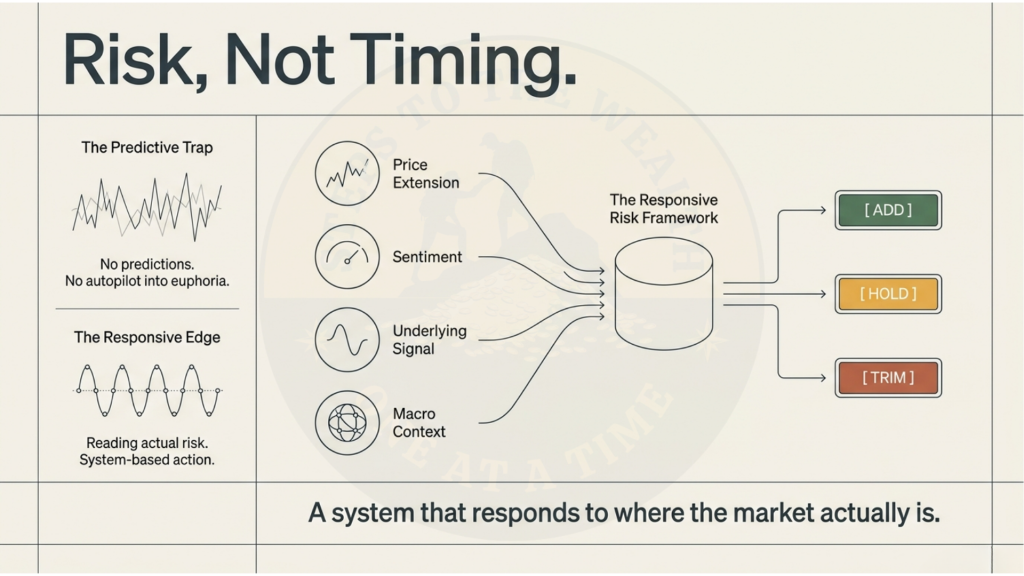
The framework reads risk — price extension, sentiment, underlying signal, macro context — and tells you when to add, when to hold, and when to trim. No predictions. No autopilot into euphoria. A system that responds to where the market actually is.

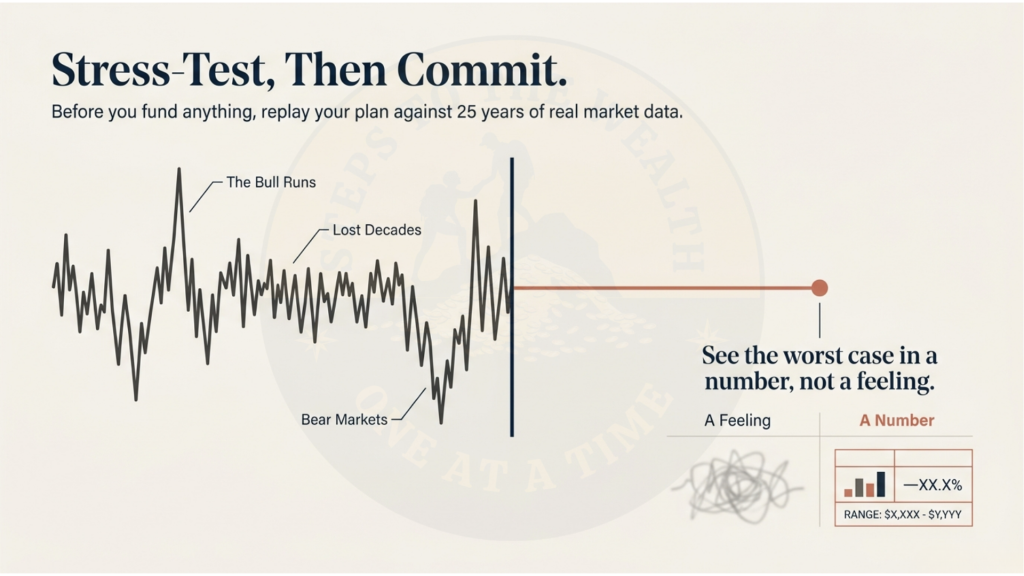
Before you fund anything, replay your plan against 25 years of real market data — bear markets, lost decades, and the bull runs in between. See the worst case in a number, not a feeling.

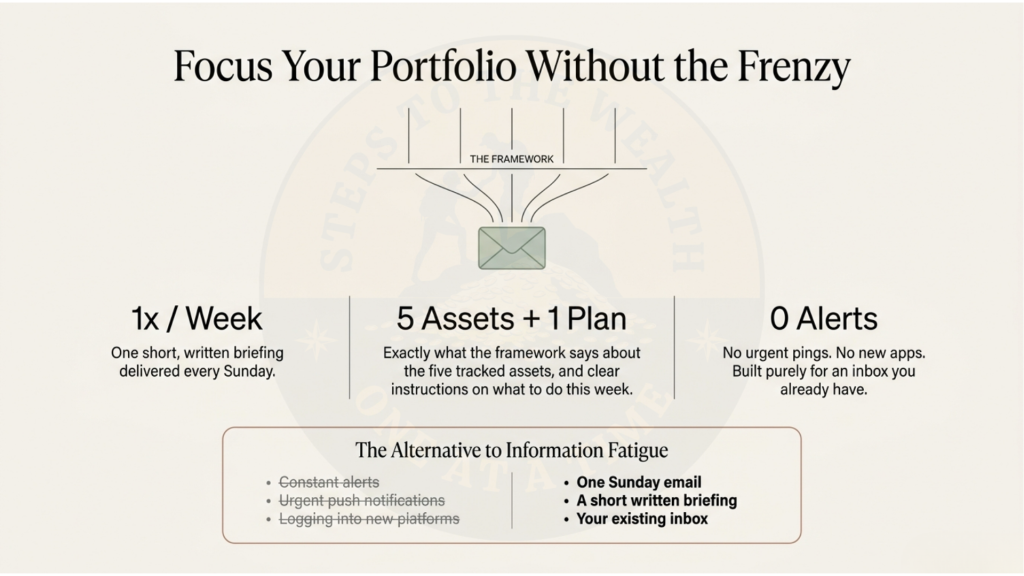
A short, written briefing every Sunday — what the framework says about the five tracked assets, and what to do this week. No alerts. No urgent pings. Built for an inbox you already have.
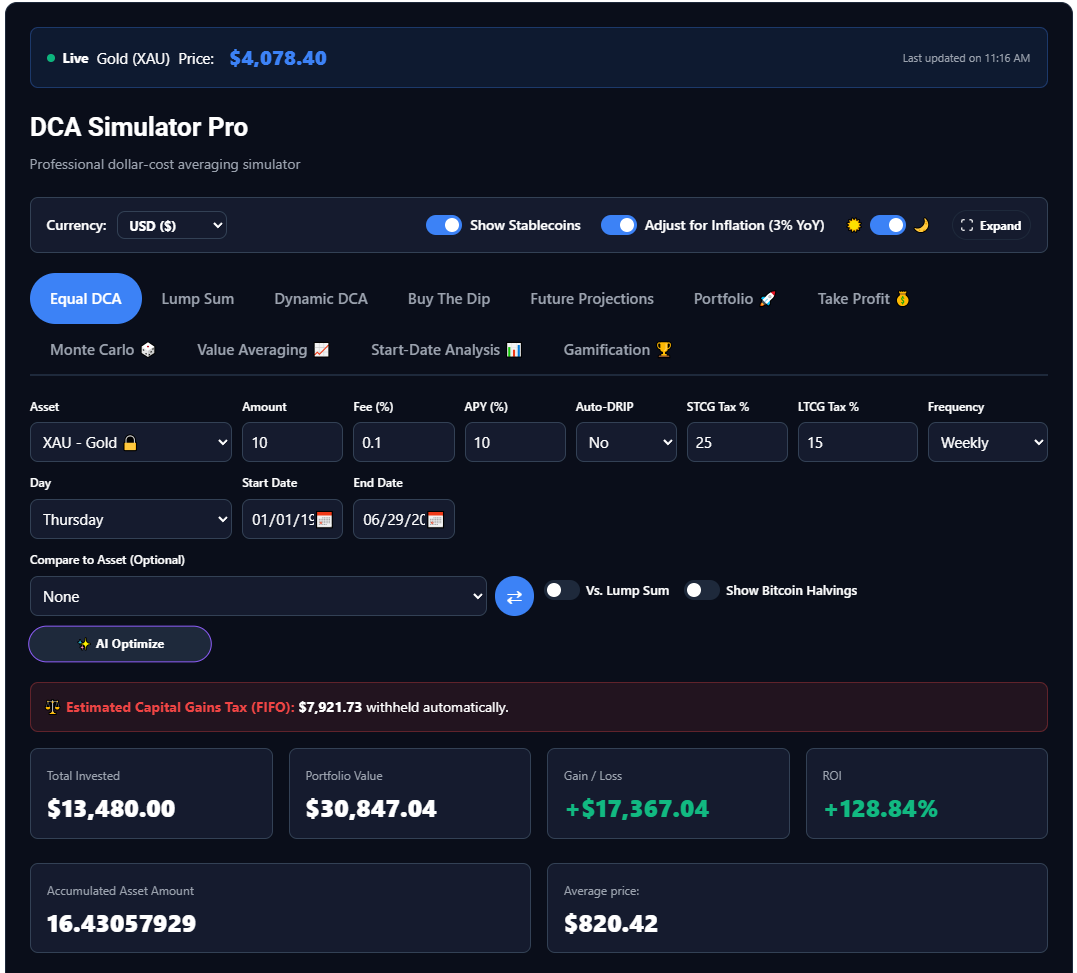
The flagship: the DCA Simulator. It takes your real numbers — paycheck, runway, risk floor — and shows you exactly what a decade of discipline looks like. More tools shipping over the next few months. Each one built to make the framework easier to actually run on a workday.
Most “investing tools” are built for traders. The DCA Simulator is built for the version of you that has back-to-backs until 6 p.m. — and a partner asking if the plan is real.
Our research desk publishes short, structural pieces on the forces that actually move long-term portfolios — liquidity, rates, and the boring miracle of compounding. No hot takes. No screenshots of red candles.
Risk tolerance vs risk capacity: one is a preference, the other is arithmetic. Capacity permitted $96,000. Behaviour supported $23,881. The lower binds.
Increasing your contributions 3% a year won 165 of 165 windows, but 43% of that win was money never invested and the added dollars earned 66% as much.
Market order vs limit order for a monthly plan: half a spread costs $39 over 20 years, and one silently skipped contribution costs 51.7 times more.
Join working professionals who get a weekly written briefing — the framework's read on the markets, every Sunday morning. Free, ad-free, unsubscribe in one click.
Subscribe and you'll also get the Dynamic DCA Blueprint — a one-page reference (PDF) that pairs with the weekly email.