A mindset lesson is an exercise with an explanation attached, not the other way round.
The word mindset attracts motivational content, and this course is the opposite of that. Each of the 15 lessons is built the same way, so it is worth showing the shape once.
The objective
One sentence stating what changes in how you decide after the lesson, so you can check afterwards whether it did. A mindset lesson without a testable objective is a pep talk, and there are none of those here.
The instruction
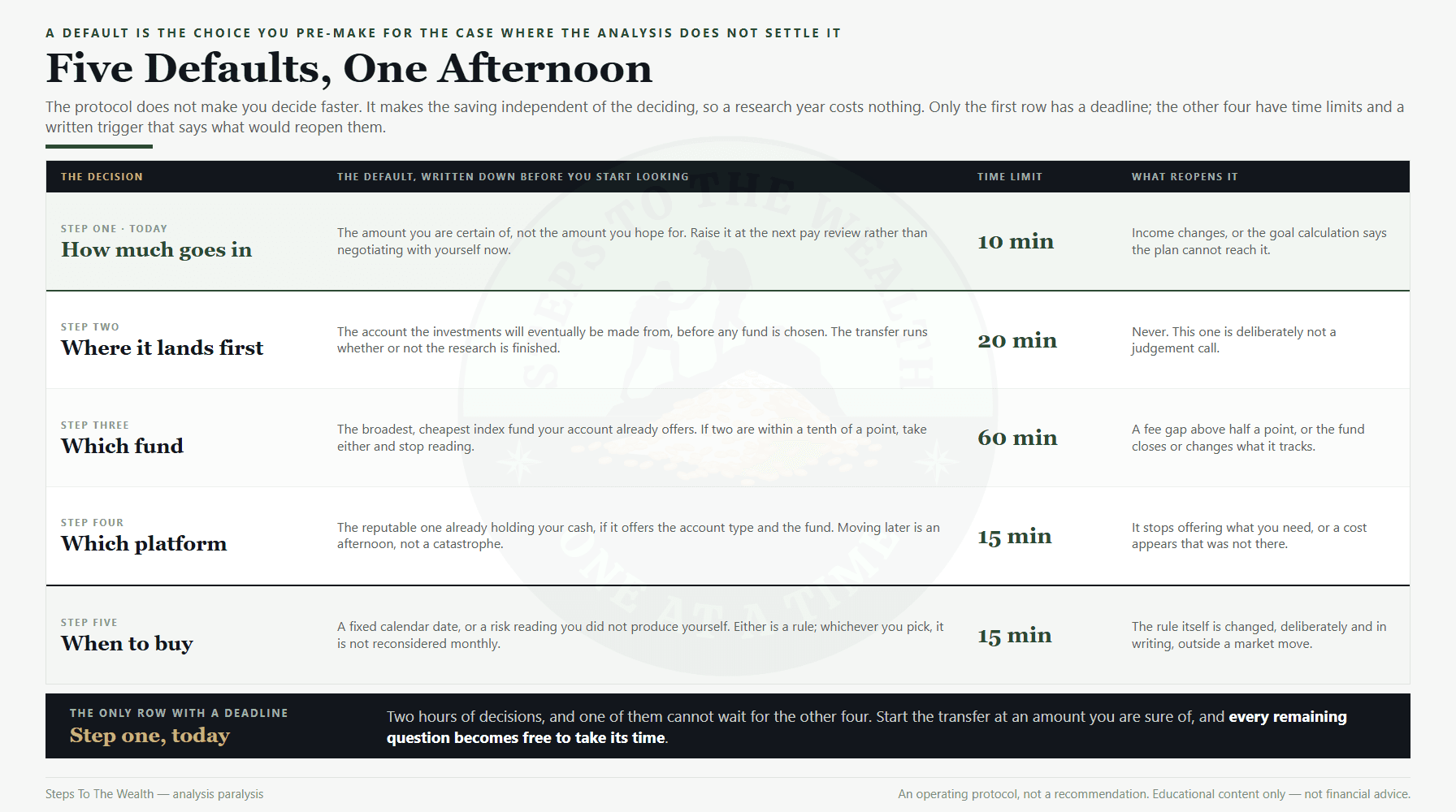
The mechanism behind one mindset default, in plain language, with the arithmetic where there is arithmetic. Lesson 2 on decision speed, for example, prices a delayed decision the same way analysis paralysis is priced: what the year of deliberation cost, in dollars, against what it protected you from.
The demonstration
A worked case — a goal and a plan that do not match, a decision that took six months, an allocation left untouched — taken apart so you can see the mindset default operating underneath it.
The exercise
The part you do. Roughly half of The Operator’s Mindset is exercises, and the artefacts they produce are yours: a goal-plan reconciliation, a decision-speed audit, an inherited-belief audit, an environment audit, and the integration plan from Lesson 15.
Why the unit of work is the lesson, not the binge
Reading all fifteen mindset lessons in an afternoon changes nothing, which is why the 30-day activation sequence paces them at one or two a week. A mindset is a set of defaults, and a default is replaced by running the new one a few times while the old one still pulls. The between-lesson application is where the change happens, and the sequence is built around it.
It is also why the mindset course is priced as a finite product. There is no module two, no upsell stack and no community bolted on to justify a subscription. Fifteen lessons, worksheets, lifetime access, and free updates, for $99 once. Investing biases covers the same defaults from the research side if you want the theory before the course.